Carrington scale solar event in a couple days by known geophysicist?

softdown
Solar Expert Posts: 4,062 ✭✭✭✭
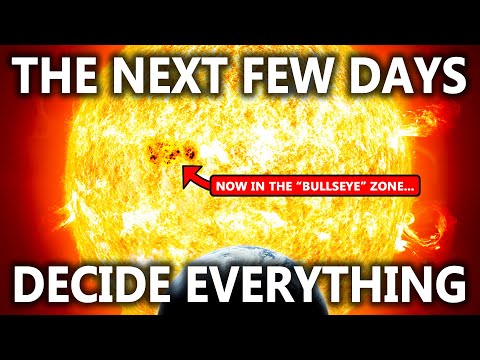 https://www.youtube.com/watch?v=6vyxVOJcKnk
First Bank:16 180 watt Grape Solar with FM80 controller and 3648 Inverter....Fullriver 8D AGM solar batteries. Second Bank/MacGyver Special: 10 165(?) watt BP Solar with Renogy MPPT 40A controller/ and Xantrex C-35 PWM controller/ and Morningstar PWM controller...Cotek 24V PSW inverter....forklift and diesel locomotive batteries
Comments
-
Delay the next NASA launch for sure.First Bank:16 180 watt Grape Solar with FM80 controller and 3648 Inverter....Fullriver 8D AGM solar batteries. Second Bank/MacGyver Special: 10 165(?) watt BP Solar with Renogy MPPT 40A controller/ and Xantrex C-35 PWM controller/ and Morningstar PWM controller...Cotek 24V PSW inverter....forklift and diesel locomotive batteries
-
Thanks for this informative video. Lots of good info, along with a few bits of entertaining speculation!!
Offgrid in cloudy PNW
Full Schneider system with 18 REC 420W panels, 100A-600V controller, XWPro, Insight Home, six Discover AES Rackmount 5kW batteries (with integrated heating), Slimline enclosure, Lynk II, AGS, H650, H2200, H3000 (Propane conversion on Victron AutoTrans with Gen Line 2 wire AGS on AC1), Kubota 4500, Onan 7500 (on second AGS and AC2).
-
Think he gave it a 10-20% chance of being a big deal.First Bank:16 180 watt Grape Solar with FM80 controller and 3648 Inverter....Fullriver 8D AGM solar batteries. Second Bank/MacGyver Special: 10 165(?) watt BP Solar with Renogy MPPT 40A controller/ and Xantrex C-35 PWM controller/ and Morningstar PWM controller...Cotek 24V PSW inverter....forklift and diesel locomotive batteries
-
No updates in past 20 hours.First Bank:16 180 watt Grape Solar with FM80 controller and 3648 Inverter....Fullriver 8D AGM solar batteries. Second Bank/MacGyver Special: 10 165(?) watt BP Solar with Renogy MPPT 40A controller/ and Xantrex C-35 PWM controller/ and Morningstar PWM controller...Cotek 24V PSW inverter....forklift and diesel locomotive batteries
-
First Bank:16 180 watt Grape Solar with FM80 controller and 3648 Inverter....Fullriver 8D AGM solar batteries. Second Bank/MacGyver Special: 10 165(?) watt BP Solar with Renogy MPPT 40A controller/ and Xantrex C-35 PWM controller/ and Morningstar PWM controller...Cotek 24V PSW inverter....forklift and diesel locomotive batteries
-
First Bank:16 180 watt Grape Solar with FM80 controller and 3648 Inverter....Fullriver 8D AGM solar batteries. Second Bank/MacGyver Special: 10 165(?) watt BP Solar with Renogy MPPT 40A controller/ and Xantrex C-35 PWM controller/ and Morningstar PWM controller...Cotek 24V PSW inverter....forklift and diesel locomotive batteries
-
Dodged another bullet apparently. If we find that a Cat 5 solar storm is coming it may help to turn off the charge controller and inverter? That is my understanding. But civilians have almost no way of knowing. Cat 5 solar storm is a Carrington scale event. We have no idea how often they occur.First Bank:16 180 watt Grape Solar with FM80 controller and 3648 Inverter....Fullriver 8D AGM solar batteries. Second Bank/MacGyver Special: 10 165(?) watt BP Solar with Renogy MPPT 40A controller/ and Xantrex C-35 PWM controller/ and Morningstar PWM controller...Cotek 24V PSW inverter....forklift and diesel locomotive batteries
-
My understanding of solar flare magnetic coupling damage is that you have to have a long conductor coupled with the magnetic pulse to create any damage. So just don't connect to those long conductors that we call the grid.
-
^^ So grid tied systems could easily get cooked. One less thing for me to worry about.First Bank:16 180 watt Grape Solar with FM80 controller and 3648 Inverter....Fullriver 8D AGM solar batteries. Second Bank/MacGyver Special: 10 165(?) watt BP Solar with Renogy MPPT 40A controller/ and Xantrex C-35 PWM controller/ and Morningstar PWM controller...Cotek 24V PSW inverter....forklift and diesel locomotive batteries
-
I thought the whole thing about a *well* grounded faraday cage was to completely shield something as the Carrington scale event or an EMP would kill it just from the field encompassing the whole area? Of course all this stuff is subject to intensity and distance from the event itself.
I do have spares for the VFXR and FM so have thought about this - at least for a moment or two. But then what about the panels and now the LFP04 Simplify blocks with their BMS? What is gonna be left to operate with the safely stored replacements? The complexities just keep adding up and there probably will never be and opportunity to gain from 'lessons learned' for the future anyway. So when it happens, may it happen directly over me.
I'm more concerned that the tree in the forest that nobody hears falling will land on me.Off Grid. Two systems: 1) 2925w panels, OB VFXR3648, FM80, FNDC, Victron BMV-712, Mate3s, 240 xformer, four SimpliPHI 3.8; 2) 780w, Morningstar 30a, Grundfos switch, controller and AC/DC pump, 8 T105. Honda EU7000is w/AGS. Champion 3100. HF 4550, Miller Bobcat. -
In Theory, the Faraday cage works because the metal "screen" intercepts the electromagnetic waves and converts them into current--inside of the screen itself. And that current is "counter" to the impressed field (the field generated in the screen is the the "opposite" phase of the incoming EM field--canceling the effects of the external fields).
Grounding of the cage does not really change anything (as far as I know). A person inside of the screened area (has to be 100% screen coverage), cannot measure any effects from the external fields.
https://en.wikipedia.org/wiki/Faraday_cageNote that cage (may be solid conductive material or a screen--frequency of the "radiation" does matter).
Faraday cages cannot block stable or slowly varying magnetic fields, such as the Earth's magnetic field (a compass will still work inside one). To a large degree, however, they shield the interior from external electromagnetic radiation if the conductor is thick enough and any hole is significantly smaller than the wavelength of the radiation.
Which brings of the discussion here about Carrington concerns... A Carrington Event is a very low frequency EM effect. And a typical Faraday cage may not attenuate the EM slowly varying solar field. To generate electricity in wiring (for example), the wire has to be miles long (quick search did not give me the frequency or length of cable at risk)...Pretty much, the segment of the wire/cable needs to be something like a minimum of 1/4 of the wave length of the EM field. Anything shorter is not really affected.
Lightning and EMP (aka nuclear electromagnetic pulse) have much higher frequencies (as far as I know) vs solar "storms". And EMP also has over nasties like gama and x-ray radiation (which has its own effects on electronics/chips).
As long as your solar equipment is not connected to external wiring, I would not worry about a Carrington effect.
If you have equipment connected to AC power lines, telephone, cable, etc... Those can bring in the electrical pulses that are generated by their large physical nature (I.e., miles of copper cables) which behave like a receiving antenna.
Interestingly, I still cannot find the frequency/wave length/length of cables/etc. that a Carrington event would effect.
If you bring in an external cable (without "protection" such as power, telephone, etc.) inside of your Faraday cage, you lose the "protection" of the cage.
-BillNear San Francisco California: 3.5kWatt Grid Tied Solar power system+small backup genset -
Bill. How about miles of fiber optic lines?Off-Grid in Terlingua, TX
5,000 watt array - 14 CS 370 watt modules - 7S2P. HZLA horizontal tracker. Schneider: XW6048NA+, Mini PDP, MPPT 80-600, SCP. 390ah LiFeP04 battery bank - 3 Discover AES 42-48-6650 48 volt 130ah LiFePO4 batteries -
BB. said:In Theory, the Faraday cage works because the metal "screen" intercepts the electromagnetic waves and converts them into current--inside of the screen itself. And that current is "counter" to the impressed field (the field generated in the screen is the the "opposite" phase of the incoming EM field--canceling the effects of the external fields).
Grounding of the cage does not really change anything (as far as I know). A person inside of the screened area (has to be 100% screen coverage), cannot measure any effects from the external fields.
https://en.wikipedia.org/wiki/Faraday_cageNote that cage (may be solid conductive material or a screen--frequency of the "radiation" does matter).
Faraday cages cannot block stable or slowly varying magnetic fields, such as the Earth's magnetic field (a compass will still work inside one). To a large degree, however, they shield the interior from external electromagnetic radiation if the conductor is thick enough and any hole is significantly smaller than the wavelength of the radiation.
Which brings of the discussion here about Carrington concerns... A Carrington Event is a very low frequency EM effect. And a typical Faraday cage may not attenuate the EM slowly varying solar field. To generate electricity in wiring (for example), the wire has to be miles long (quick search did not give me the frequency or length of cable at risk)...Pretty much, the segment of the wire/cable needs to be something like a minimum of 1/4 of the wave length of the EM field. Anything shorter is not really affected.
Lightning and EMP (aka nuclear electromagnetic pulse) have much higher frequencies (as far as I know) vs solar "storms". And EMP also has over nasties like gama and x-ray radiation (which has its own effects on electronics/chips).
As long as your solar equipment is not connected to external wiring, I would not worry about a Carrington effect.
If you have equipment connected to AC power lines, telephone, cable, etc... Those can bring in the electrical pulses that are generated by their large physical nature (I.e., miles of copper cables) which behave like a receiving antenna.
Interestingly, I still cannot find the frequency/wave length/length of cables/etc. that a Carrington event would effect.
If you bring in an external cable (without "protection" such as power, telephone, etc.) inside of your Faraday cage, you lose the "protection" of the cage.
-Bill
Thank you for differentiating the two (or three). And @SumPower too.Off Grid. Two systems: 1) 2925w panels, OB VFXR3648, FM80, FNDC, Victron BMV-712, Mate3s, 240 xformer, four SimpliPHI 3.8; 2) 780w, Morningstar 30a, Grundfos switch, controller and AC/DC pump, 8 T105. Honda EU7000is w/AGS. Champion 3100. HF 4550, Miller Bobcat. -
Undersea fiber optic cables as an example...
They need a repeater for every ~30-60 Km (18-40 miles) of fiber. so you have the issue of sending electrical power down copper cables to power each repeater--And at a maximum of 11,000 kM (6,000+ miles) for an European/Mid East/Asia cable, that is something like ~240 +/- repeaters--Copper cables+power/electronics of the repeaters need to take Solar Flares/etc. into the design.
A "typical" design life for an undersea cable is around 25 years... They do not last "forever".
At this point, it appears that ships dragging anchors and other "cold war/sabotage" methods are major issue right now.
https://www.npr.org/2024/12/31/nx-s1-5243302/finland-russia-severed-undersea-cable-shadow-fleet
Not only communications cables, but there are grid interconnect cables, natural gas pipelines, and even fuel pipelines (between refineries, airports, fuel depots) that are under sea, bays, under ground too.
https://www.nbcnews.com/news/world/undersea-cables-are-cut-suspicion-falls-russian-chinese-vessels-rcna187105With an average of about 200 cable faults a year, according to the International Cable Protection Committee, damage to undersea communications infrastructure is not uncommon. The majority are caused by ship anchors or fishing activity such as trawling, where heavy equipment is dragged across the seafloor.
There is an ongoing need for equipment maintenance and repairs, as well as new installations. And even Carrington type events are still rare and are only regional effects (at least so far).
Many of these "failures" usually (short term) have work arounds such as sending data via other cables, etc. until repairs can be made.
For me, my major concern is with the utility power grid. At least in the USA, it appears not a lot of work has been done hardening major power facilities. From what I understand, the weak links are very large transformer installations and how they can be damaged/destroyed by the electrical surges. Can take years to build replacements and some are so large they needed specialized freight trains to move them into place... And (some/many?) of these rail lines have been torn up and the land repurposed into buildings/roads/city infrastructure.
Interesting report from an Insurance point of view:
https://assets.lloyds.com/assets/pdf-solar-storm-risk-to-the-north-american-electric-grid/1/pdf-Solar-Storm-Risk-to-the-North-American-Electric-Grid.pdf
1 Executive Summary
A Carrington-level, extreme geomagnetic storm is almost inevitable in the future. While the probability of an extreme storm occurring is relatively low at any given time, it is almost inevitable that one will occur eventually. Historical auroral records suggest a return period of 50 years for Quebec-level storms and 150 years for very extreme storms, such as the Carrington Event that occurred 154 years ago.
The risk of intense geomagnetic storms is elevated as we approach the peak of the current solar cycle. Solar activity follows an 11-year cycle, with the most intense events occurring near the cycle peak. For the current Cycle 24, the geomagnetic storm risk is projected to peak in early 2015.
As the North American electric infrastructure ages and we become more and more dependent on electricity, the risk of a catastrophic outage increases with each peak of the solar cycle. Our society is becoming increasingly dependent on electricity. Because of the potential for long-term, widespread power outage, the hazard posed by geomagnetic storms is one of the most significant.
Weighted by population, the highest risk of storm-induced power outages in the US is along the Atlantic corridor between Washington D.C. and New York City. This takes into account risk factors such as magnetic latitude, distance to the coast, ground conductivity and transmission grid properties. Other highrisk regions are the Midwest states, such as Michigan and Wisconsin, and regions along the Gulf Coast.
The total U.S. population at risk of extended power outage from a Carrington-level storm is between 20-40 million, with durations of 16 days to 1-2 years. The duration of outages will depend largely on the availability of spare replacement transformers. If new transformers need to be ordered, the lead-time is likely to be a minimum of five months. The total economic cost for such a scenario is estimated at $0.6-2.6 trillion USD (see Appendix).
Storms weaker than Carrington-level could result in a small number of damaged transformers (around 10-20), but the potential damage to densely populated regions along the Atlantic coast is significant. The total number of damaged transformers is less relevant for prolonged power outage than their concentration.
The failure of a small number of transformers serving a highly populated area is enough to create a situation of prolonged outage. A severe space weather event that causes major disruption to the electricity network in the US could have major implications for the insurance industry. If businesses, public services and households are without power for sustained periods of time, insurers may be exposed to business interruption and other claims.
-Bill
Near San Francisco California: 3.5kWatt Grid Tied Solar power system+small backup genset -
People are very bad about evaluating risks... From a poster 27 years ago:
https://forum.solar-electric.com/discussion/comment/82800#Comment_82800
Humans are wired to be irrational about evaluating risk. We tend to rate risks that are spectacular but infrequent, higher than those that are more mundane but occur more often (and just as deadly). So when deciding what to worry about, it's a good idea to look at real data as opposed to opinion.
Number of people killed in the US by terrrrrirsts since 2000: 1621 (180 people per year)
http://www.start.umd.edu/gtd/search/Results.aspx?expanded=no&casualties_type=&casualties_max=&country=217&ob=GTDID&od=desc&page=1&count=100#results-table
Number of people killed by Coronary heart disease in 1 year: 450 000
http://wiki.answers.com/Q/How_many_americans_have_heart_disease
Number of people killed in road accidents in 1 year ( 1998 ): 41 000
http://www.allcountries.org/uscensus/1035_motor_vehicle_accidents_number_and_deaths.html
If you really do insist on worrying about things, then best to worry about things that are actually likely to kill you
An interesting article on the psychology of risk and the kind of bad risk decisions we tend make: http://www.schneier.com/essay-155.html
-BillNear San Francisco California: 3.5kWatt Grid Tied Solar power system+small backup genset

 https://www.youtube.com/watch?v=QnDlasfHjrs
 https://www.youtube.com/watch?v=RJt9eSRw7dA



Categories
- All Categories
- 229 Forum & Website
- 136 Solar Forum News and Announcements
- 1.3K Solar News, Reviews, & Product Announcements
- 179 Solar Information links & sources, event announcements
- 892 Solar Product Reviews & Opinions
- 252 Solar Skeptics, Hype, & Scams Corner
- 22.5K Solar Electric Power, Wind Power & Balance of System
- 3.5K General Solar Power Topics
- 6.7K Solar Beginners Corner
- 1K PV Installers Forum - NEC, Wiring, Installation
- 2.1K Advanced Solar Electric Technical Forum
- 5.6K Off Grid Solar & Battery Systems
- 428 Caravan, Recreational Vehicle, and Marine Power Systems
- 1.1K Grid Tie and Grid Interactive Systems
- 655 Solar Water Pumping
- 816 Wind Power Generation
- 620 Energy Use & Conservation
- 622 Discussion Forums/Café
- 316 In the Weeds--Member's Choice
- 74 Construction
- 125 New Battery Technologies
- 107 Old Battery Tech Discussions
- 3.8K Solar News - Automatic Feed
- 3.8K Solar Energy News RSS Feed