Battery discharge even at no load

FrankNice1
Registered Users Posts: 2 ✭
Am using a
12/230ah vitra battery,
12/24v sachet inverter
12/24v 40ah powerMr charge controller
The charge controller enabled me to do equalization charging of up to 3 hours and absorption mode of up to 2 hours but yet without load after getting a 13 volt around 6pm it's discharged down to 12.6 volt.
The battery is less than a year old and from calculation it can't power a load of 100w for 6hours
12/230ah vitra battery,
12/24v sachet inverter
12/24v 40ah powerMr charge controller
The charge controller enabled me to do equalization charging of up to 3 hours and absorption mode of up to 2 hours but yet without load after getting a 13 volt around 6pm it's discharged down to 12.6 volt.
The battery is less than a year old and from calculation it can't power a load of 100w for 6hours
Comments
-
The battery, cc, and
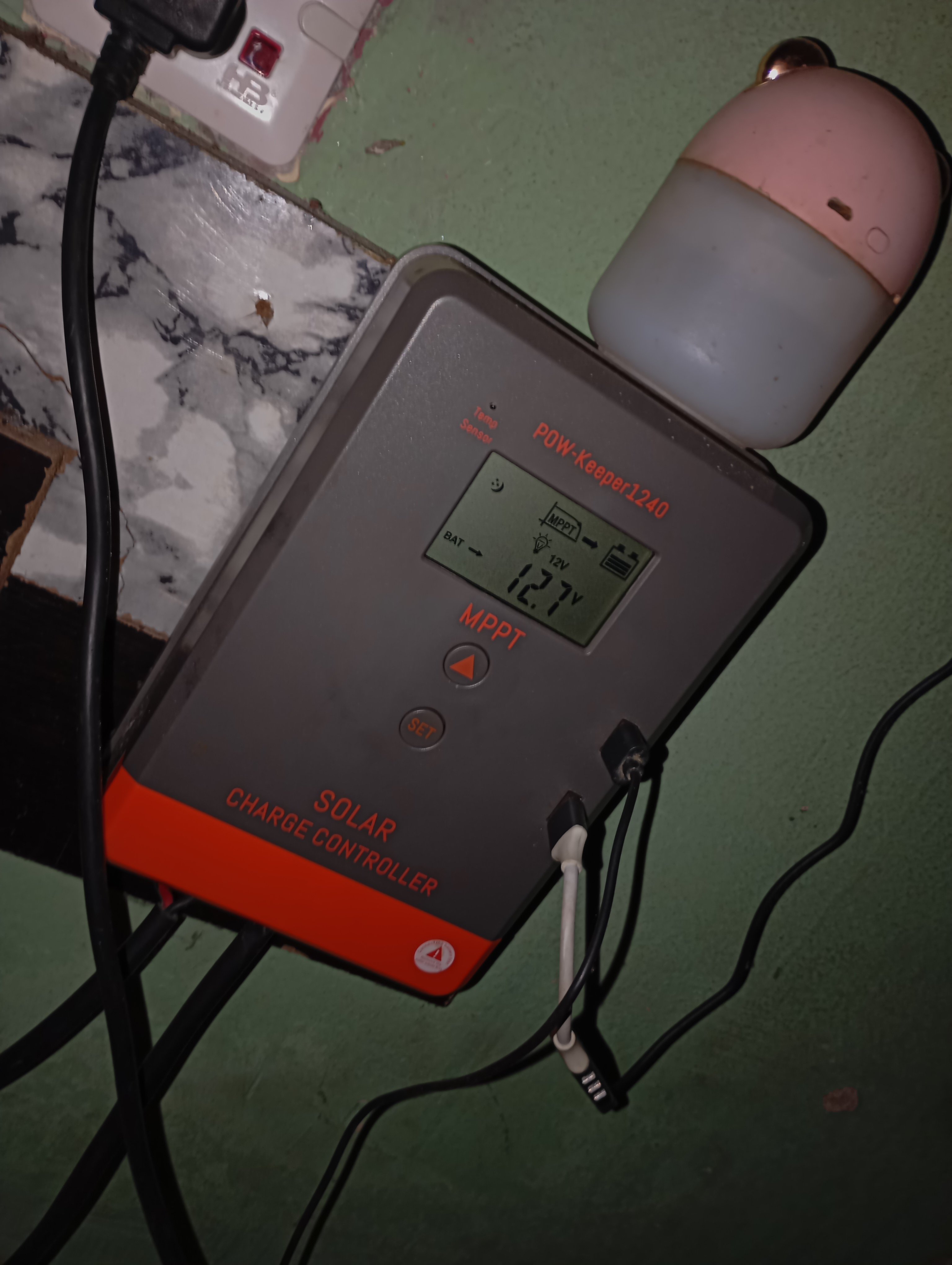
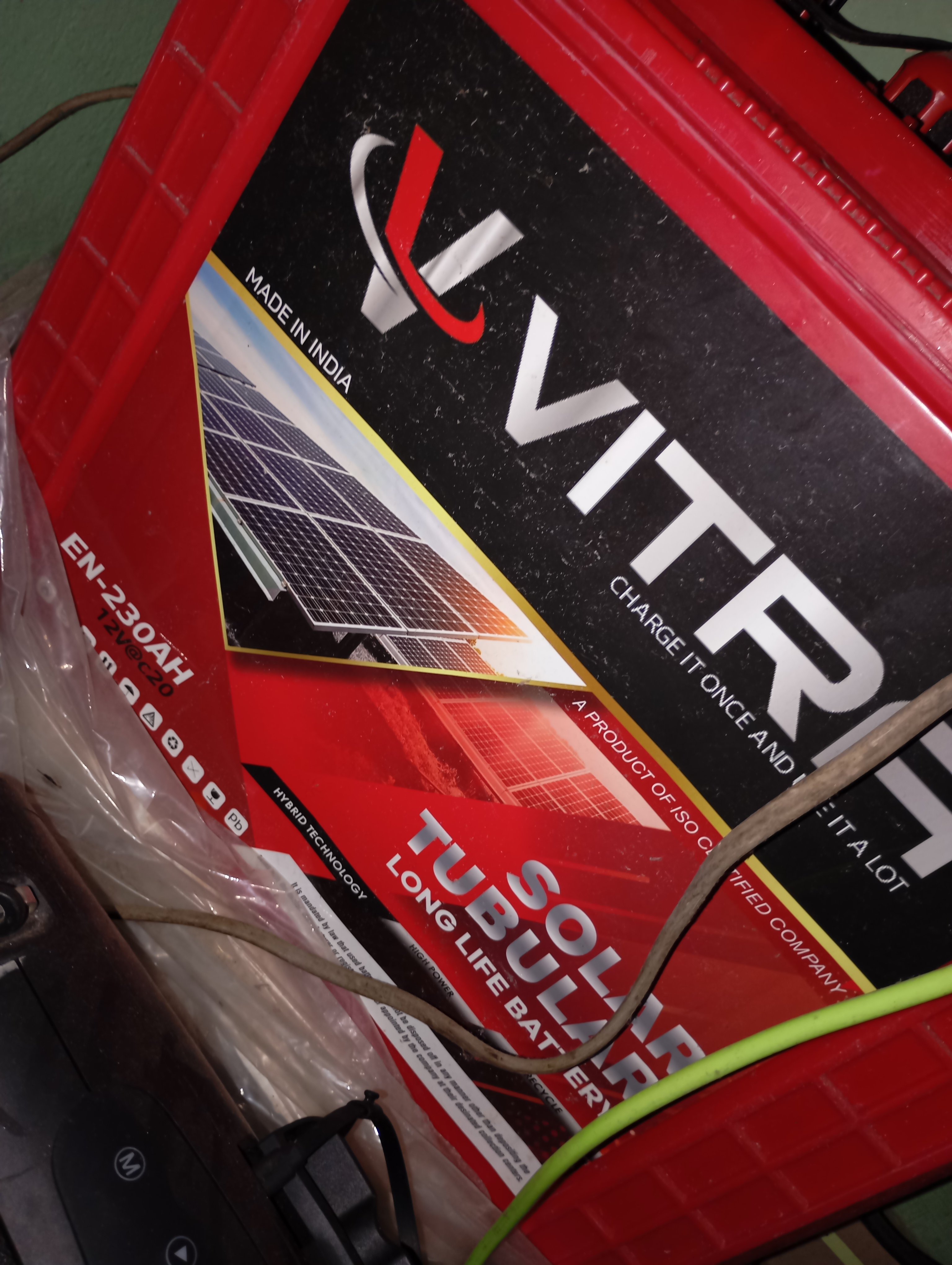
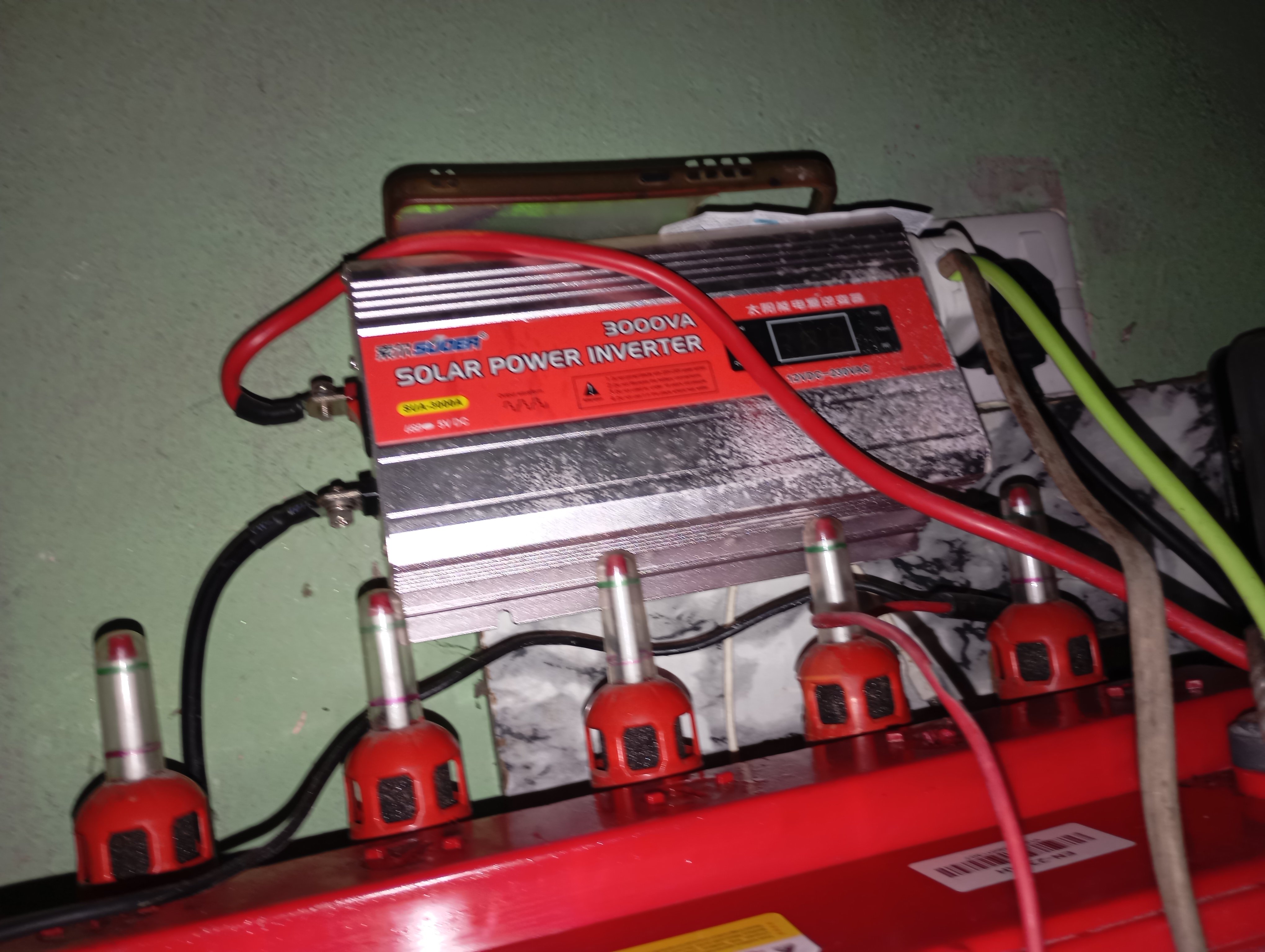 inverter
 -
Welcome to the forum Frank.
Just a couple of estimates here... Let's guess that your battery is 100% full at 12.8 volts (lead acid?), and 100% empty at 11.8 volts (resting voltage, not under load). That would give you a 10% use for every 0.1 Volt drop (in resting voltage).
Ideally would suggest that your plan to use 75% to 50% of your battery capacity each night, and recharge the next day... You can use 80% discharge (20% left) for those "emergency conditions", storm for a couple of days/poor solar, etc... But you really need to recharge quickly to prevent long term battery damage/loss of capacity.
So, 75% state of charge (or 25% used) for your battery:
12 volts * 230 AH * 0.25 usage = 690 Watt*Hours "over night/after solar charging" suggested loads.
Now that is 12 VDC loads...
Looking at your inverter, I could not find the "Tare Losses" (or unloaded AC inverter power draw) (give us link to detailed specs?).
Using a good quality 12 volt -> 3000 Watt AC inverter (there are better, and there are worse) inverter would draw:
https://www.solar-electric.com/lib/wind-sun/SP3000SPEC.pdf
No Load Curent: ≤3.8A@12VDC
3.8 amps * 12 volts = 45.6 Watts "no load"
For your battery, would use around 25% of capacity in xx Hours:
690 WH battery (25% usage) / 45.6 Watts no load inverter = 15 hours just to keep inverter running
Now, assume 85% inverter efficiency under load (typical for many sine wave inverters)
690 Watt*Hour battery (25% of capacity) * 0.85 inverter eff = 586.5 Watt*Hours of AC power available
586.5 WH / 100 Watt load = 5.8 hours of "useful" 100 Watt 230 VAC load support @ 25% capacity...
Which is pretty close to your measurements (0.2 volt drop ~ 20% capacity for 6 hours of 100 Watt load)...
In general, I would be suggesting that your tell us what your loads need to be (I.e. 100 Watts for 12 hour, or whatever), and I guess you are around the Port Harcourt region of Nigeria (pure guess). We can work from your loads, location, and recommend battery bank, solar panels, etc...
If you have loads that are 100 Watts on average, you should pick an AC inverter in the 200 Watt range, not the 3,000 Watt unit you have. Typically, smaller AC inverters are more efficient when powering smaller AC loads.
And there is looking at your loads themselves... If your loads are lighting (as and example), 12 VDC LED lights will usually be much more efficient that 12 VDC solar -> 230 VAC inverter -> ~12 VDC powered LED lights.
-BillNear San Francisco California: 3.5kWatt Grid Tied Solar power system+small backup genset

Categories
- All Categories
- 233 Forum & Website
- 140 Solar Forum News and Announcements
- 1.3K Solar News, Reviews, & Product Announcements
- 181 Solar Information links & sources, event announcements
- 894 Solar Product Reviews & Opinions
- 252 Solar Skeptics, Hype, & Scams Corner
- 22.5K Solar Electric Power, Wind Power & Balance of System
- 3.5K General Solar Power Topics
- 6.7K Solar Beginners Corner
- 1K PV Installers Forum - NEC, Wiring, Installation
- 2.1K Advanced Solar Electric Technical Forum
- 5.6K Off Grid Solar & Battery Systems
- 428 Caravan, Recreational Vehicle, and Marine Power Systems
- 1.1K Grid Tie and Grid Interactive Systems
- 656 Solar Water Pumping
- 816 Wind Power Generation
- 621 Energy Use & Conservation
- 623 Discussion Forums/Café
- 316 In the Weeds--Member's Choice
- 74 Construction
- 125 New Battery Technologies
- 108 Old Battery Tech Discussions
- 3.8K Solar News - Automatic Feed
- 3.8K Solar Energy News RSS Feed